
Teaching
I have experience teaching undergraduate & graduate classes and seminars, both in person and synchronously online, at community, state, & private colleges.
MY TEACHING PHILOSOPHY
Land-based
•
Popular Education
•
Student-centered
•
Healing-centered
•
Ocean-based
•
Participatory
•
Embodied
•
Land-based • Popular Education • Student-centered • Healing-centered • Ocean-based • Participatory • Embodied •
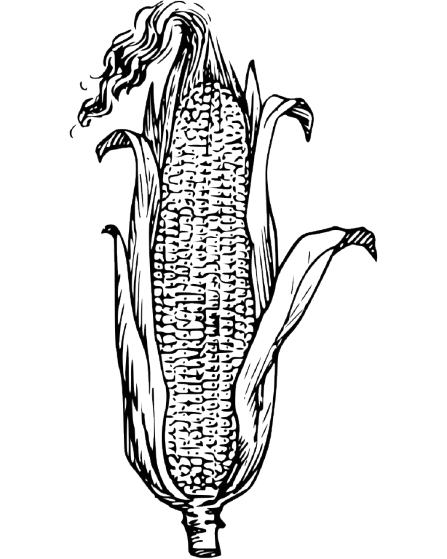
My pedagogy is woven from the land & the teachings of my grandparents.

COURSES I HAVE TAUGHT
Psychosocial and Collective Trauma*
*In progress
Community, Liberation, Indigenous, & Eco-Psychologies Department, Pacifica Graduate Institute, Santa Barbara, CA
(Spring/Winter 2027)
Graduate course
The Psychology of Women
Psychology Department, Medgar Evers College, Brooklyn, NY
(Summer 2024 & 2025)
Undergraduate class
This course presents historical, cross-cultural, and research-oriented perspectives to examine major areas, issues, and controversies in the psychology of women. Students examine women's physical, cognitive, emotional, and psychosocial development and the use of cross-cultural research within these domains. Students analyze biological and psychosocial factors, including race, class, culture, ethnicity, and gender equity, that influence women's development and identity, and discuss conditions and issues facing women in different countries and cultures. This is a writing-intensive course.
Psychology of Liberation & Oppression
Psychology Department, Medgar Evers College, Brooklyn, NY
(Summer 2022)
Undergraduate class
This course explores the psychology of oppression and liberation. We will begin class by honoring the tradition of Black radical activism, which will allow us to learn about systemic oppression from the perspective of Black radical organizers. Then, we will read key texts that historicize the oppressive and repressive roots of psychology (as a field/discipline). Next, we will engage in critical dialogues assisted by Frantz Fanon’s work and our own wisdom and lived experiences. During class, we will engage in a multiplicity of methods for knowledge production, including music, meditation, body mapping, and group activities. In Week 4, our conversations will be guided by readings in the tradition of liberation psychology. We will conclude our class with readings and discussions on mental health, healing, and liberation. Grounded in Paulo Freire’s model of a liberatory education, classes are designed to promote student-centered dialogues, reflexivity, and calls to action.
Colorism: A Global Perspective
Department of Interdisciplinary Studies, John Jay College of Criminal Justice, New York, NY
(Fall 2022)
Undergraduate class
This course explores the complex topic of colorism, a reality that touches and affects all races and ethnicities around the globe. We will define the concept of colorism and understand how it stems from racism and an extensive, insidious history of white supremacy in the US. We will investigate how colorism, intersecting with other identities such as geography, gender, sexuality, race, and class, manifests itself around the world, in art, fashion, law, film, employment, music, politics, in people’s lives from micro to macro systems. Drawing on our phenomenological experience, research, and theories, we will think critically about colorism as an oppressive force in the world today and identify and practice ways to address its harmful effects.
Introduction to Social Work Research
School for Social Work, Smith College, Northampton, MA
(Summer 2022)
Graduate course
This course introduces students to the role of research and data within social work practice. Students will assess this relationship, both historical and current, through the liberatory lenses of critical theories about race, Indigenous approaches to research and knowledge, and intersectionality. The goal of this course is to critically analyze research theories, methods, and findings in a way that advances the social work profession’s goals of racial and social justice. Students will strengthen their understanding of current research landscapes and approaches to knowledge building to achieve self-determination for marginalized clients and communities. Examples throughout the course will be practice-oriented and will build an understanding of research justice as a strategic framework for evaluating and recalibrating social work practice at micro, meso, and macro levels.
Participatory Action Research: A Decolonial, Abolitionist, and Hemispheric Approach
School for Social Work, Smith College, Northampton, MA
(Summer 2023)
Graduate course
Participatory Action Research (PAR) is a praxis and a commitment to abolition, liberation, and radical healing. PAR has been co-opted across disciplines. Not surprisingly, PAR has also been depoliticized and dehistoricized from its radical roots and aims. In this embodied and theory-based seminar, we will learn the history of PAR. We will also read radical and mainstream articulations of PAR. While the seminar will be grounded in social work and the experiences of social workers, we will also take an interdisciplinary approach, including readings in critical psychology and decolonial feminist geography, as well as in the Black radical tradition and decolonial feminisms. The works we will read in class will offer a hemispheric approach to theorizing, feeling, and practicing PAR in ways that decenter the colonial economy of knowledge production.
Community-Based Anti-Racism (CBARE)
School for Social Work, Smith College, Northampton, MA
(AY 2022-2023 & 2025-2026)
Graduate course
The Community-Based Anti-Racism Experience (CBARE) is a guided mezzo-level practice experience focused on racial justice in communities, organizations & coalitions. CBARE extends learning from the Community Organizing and Movement Building (627) course, which students will have completed during their second Summer. The 627 course facilitates students’ evolving understanding of the implications of structural racism and opportunities to promote or diminish racial (in)justice on the organizational and community levels. During the CBARE, students will reflect on the dynamics and ethics of engagement while applying practical skills to contribute to an organization or coalition’s ongoing racial justice efforts.
Introduction to Psychology
Psychology Department, California State University, Monterey Bay, Monterey Bay, CA
(Fall 2025 & Fall 2026)
Undergraduate class
This course examines the scientific study of behavior and mental processes by exploring major theories and concepts, methods, and research findings in psychology. Topics covered span the subfields of psychology, including Indigenous psychology; the biological bases of behavior; perception, cognition, learning, emotion, and motivation; development; personality; social psychology; psychological disorders and therapies; and the application of psychology to contemporary social issues.
Psychology of Healing & Liberation
Psychology Department, California State University, Monterey Bay, Monterey Bay, CA
(Fall 2025 & Fall 2026)
Undergraduate class
Grounded in liberation psychology, the readings and class discussions explore practices for healing oneself and one's communities amid historical and contemporary oppression. Emphasis will be placed on how Communities of Color have resisted oppression and worked to heal disconnections. The course offers hands-on research experience and a chance to catalyze social change by planting "seeds" of liberation.
Decolonial Feminism(s) Syllabus
This syllabus began with the desire to integrate decolonial feminist thought into my doctoral training in psychology.
Initially, I planned to conduct an independent study with my mentor and advisor, Dr. Michelle Fine. However, in the spirit of collective learning, I invited students from various disciplines to revise & contribute to the syllabus & ultimately co-teach this “collective study.”
Anonymized Student Feedback